Concrete Contractors San Jose | Precision Flatwork & Slabs
San Jose Asphalt delivers structural concrete flatwork and site paving engineered to withstand heavy axle loads and challenging soil conditions across San Jose and the greater Silicon Valley corridor.
- Mitigation of expansive clay using compacted Class 2 aggregate subbases
- Full compliance with California Title 24 accessibility standards and City of San Jose encroachment codes
- High-durability flatwork, structural slabs, curb-and-gutter installations, and precision saw-cut jointing
Tell Us Where, and We'll Price Your Project
By submitting you agree to be contacted about your project. We never sell your information.
Got It. We're on the Way.
Your request is in front of our team. Expect a call from a real estimator, usually within one business day.
ENGINEERED CONCRETE INSTALLATION BACKED BY LICENSED BUILDERS
San Jose Asphalt is operated by We Love Paving, Inc. (CSLB #1049649 · DIR #1000590190 · CA CARRIER #571708). We provide complete structural concrete paving, apron replacement, curb-and-gutter restoration, and accessibility upgrades throughout San Jose, Campbell, Milpitas, Santa Clara, and neighboring Silicon Valley properties.
Eliminating Premature Concrete Failure Across San Jose Properties
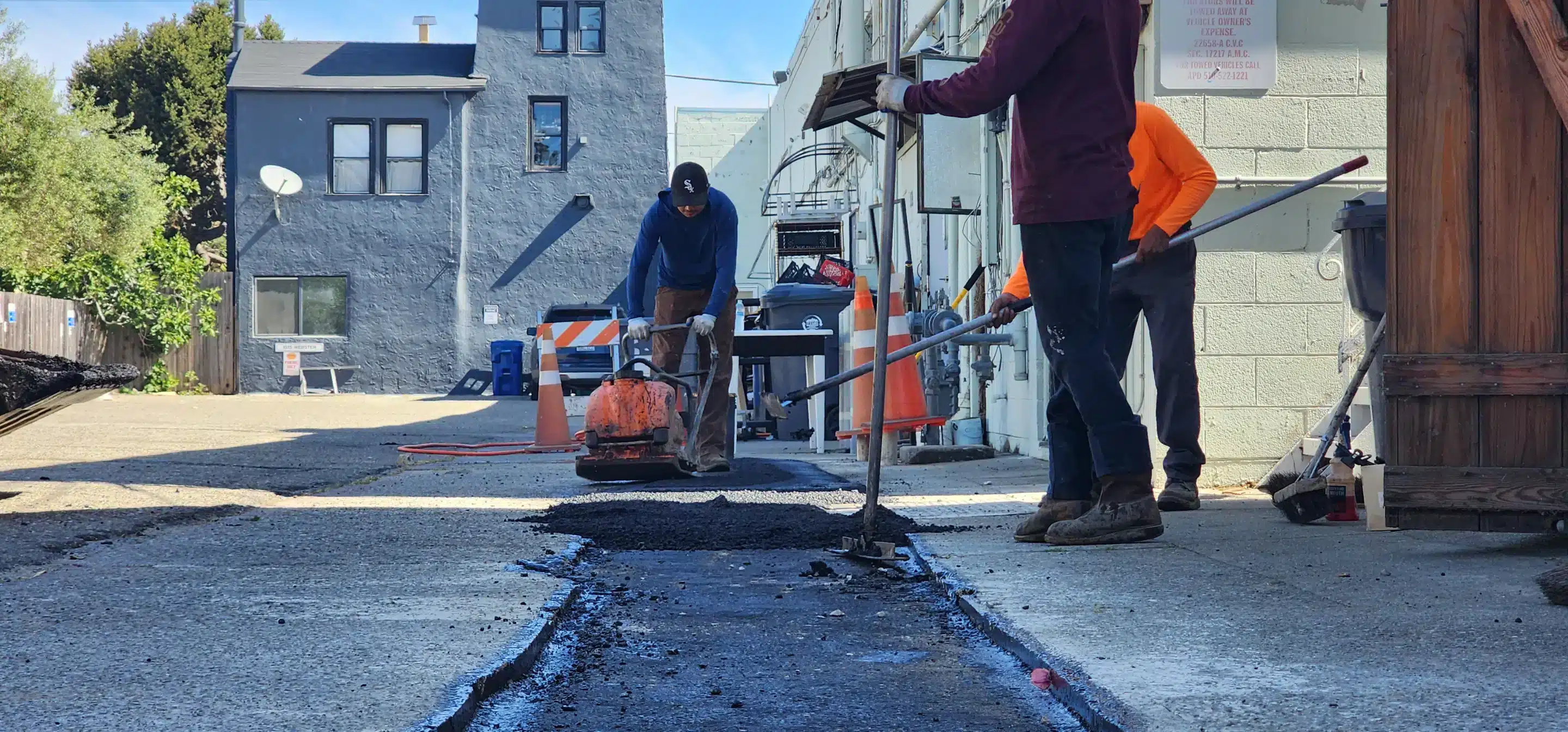
Property owners and facility managers in San Jose frequently encounter severe surface cracking, sunken slabs, and jagged vertical tripping hazards. In the Santa Clara Basin, heavy Campbell and Diablo clay soils naturally swell when soaked during winter rainstorms and contract rapidly under dry summer heat. When concrete is poured directly over unconditioned soil or without adequate subbase stabilization, this ground movement fractures the rigid slab, creates tripping liabilities, and damages vehicle suspensions.
Our engineering-driven approach replaces failing flatwork with properly reinforced, well-drained structural concrete designed for sustained durability.
SCHEDULE A DETAILED CONCRETE SITE EVALUATION IN SAN JOSE
Precision flatwork, structural pads, and Title 24 accessibility upgrades engineered for South Bay soil conditions.
Engineering Concrete for Subgrade Stability and Code Compliance
Concrete longevity in Silicon Valley depends on what happens beneath the pour. We analyze local soil composition, establish mechanically compacted subbases, and align all grading with California Title 24 standards to prevent surface ponding and structural cracking. Every project executed by San Jose Asphalt is built to municipal standards and rigorous engineering benchmarks.
- Soil Stabilization
- Title 24 Precision
- Class 2 Compaction
- Controlled Jointing
This Is What Our Clients Say About Our Work
Structural Flatwork and Slab Engineering on Expansive Silicon Valley Clay
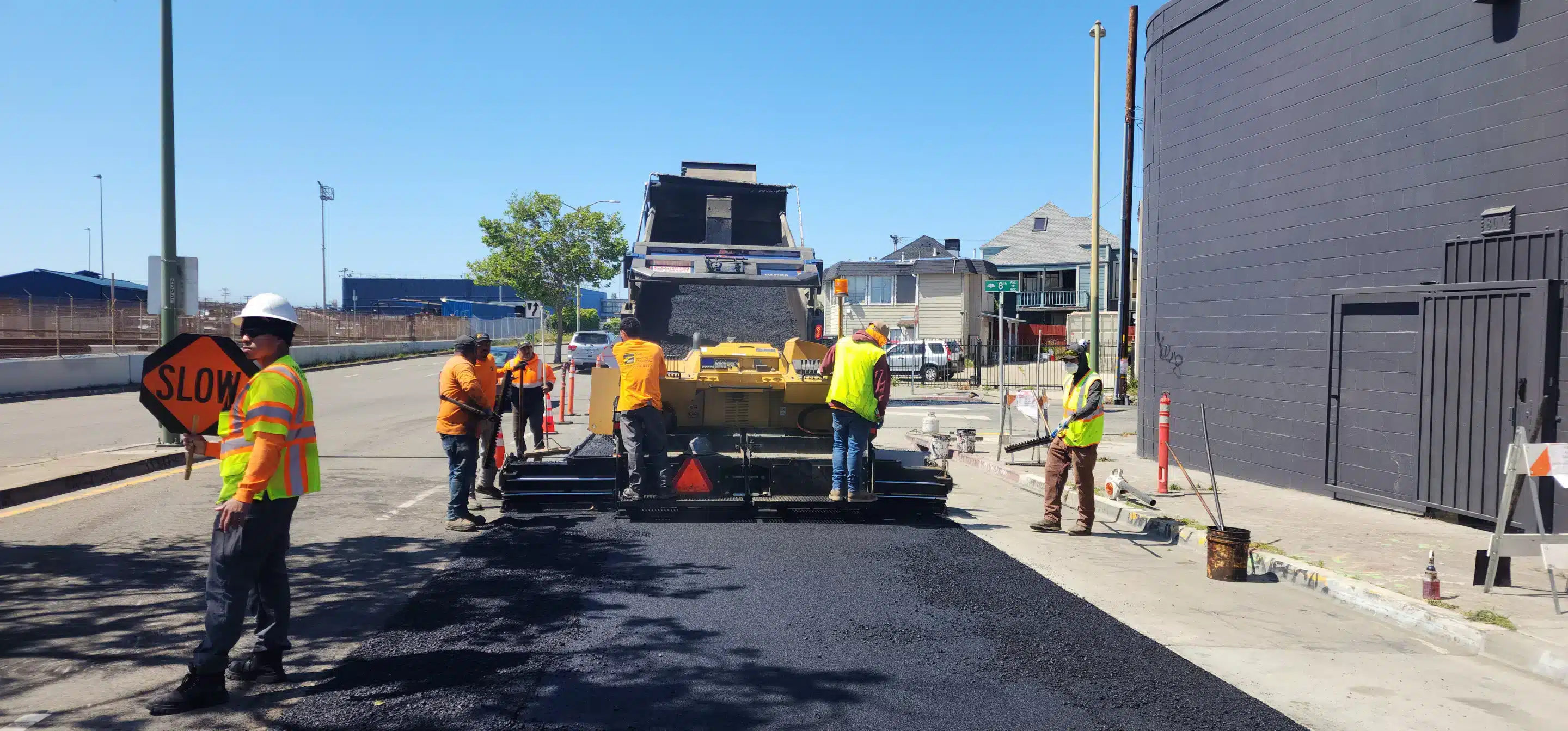
The heavy alluvium and clay soils across San Jose exert powerful hydraulic heave against rigid pavements. Without adequate structural engineering, access aprons, dumpster pads, loading zones, and exterior walkways experience differential settlement, leading to unseated slabs and severe edge spalling under repetitive vehicle weight.
Municipal Right-of-Way Compliance, Curbs, Gutters, and Title 24 Pathways
Exterior flatwork must do more than hold weight; it must guide storm runoff away from structures and maintain continuous accessibility. In San Jose, broken curbs, misaligned drainage pans, and deteriorated public walkways can result in standing water, municipal code citations, or costly legal exposure under state accessibility mandates.
Our crews reconstruct perimeter curb-and-gutter systems, valley gutters, and pedestrian ramps adhering strictly to City of San Jose Department of Transportation Standard Details and Encroachment Permit standards. For pedestrian paths of travel, we laser-grade concrete formwork to enforce California Title 24 Chapter 11B tolerances—restricting cross-slopes to under 2.0% and ensuring walking surface transitions stay flush under 0.25 inches to permanently eliminate trip liabilities.
San Jose Concrete Durability: Property Owner Concerns and Technical Solutions
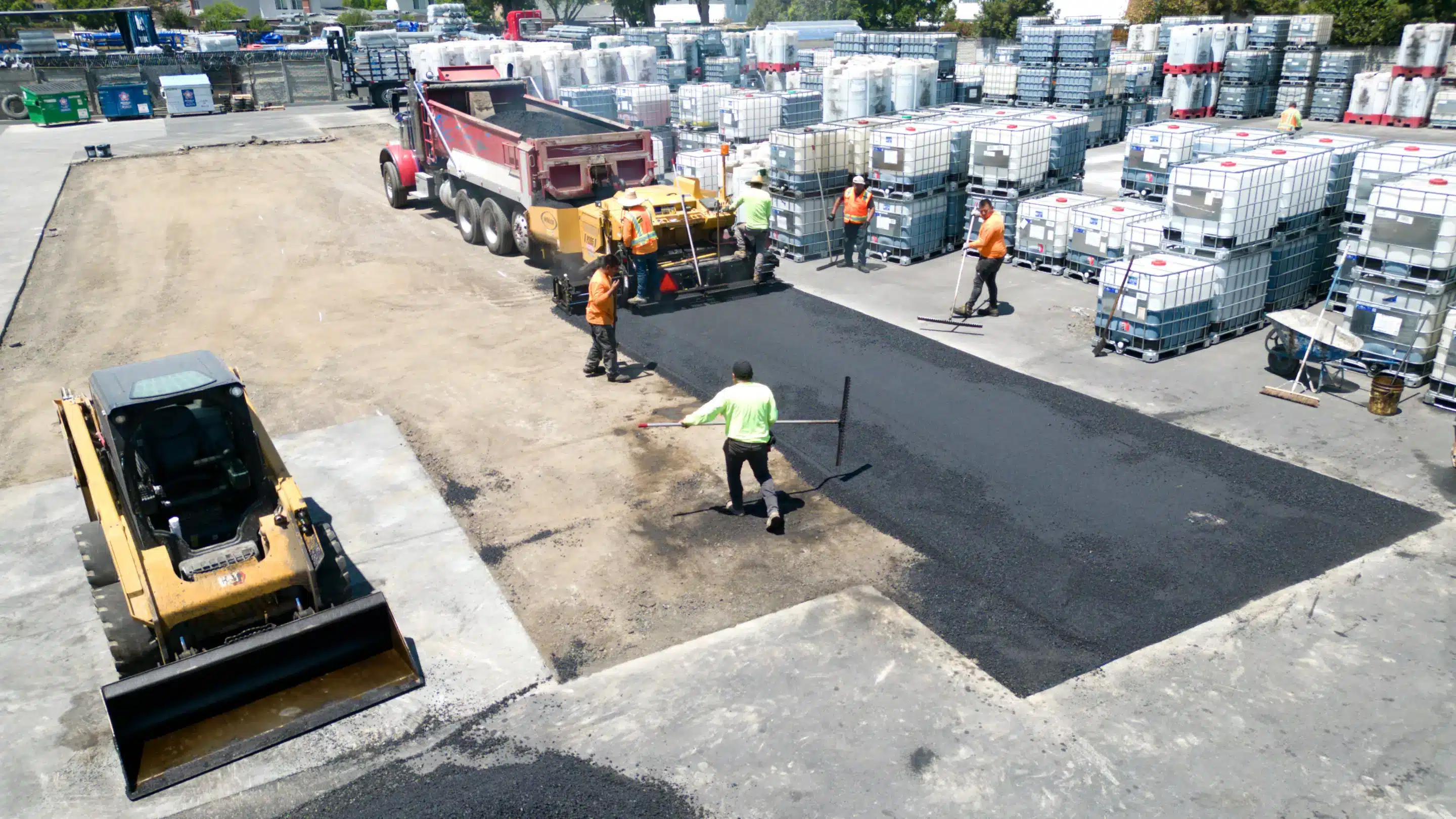
A direct comparison of everyday paving frustrations in San Jose, the underlying ground dynamics causing them, and the engineering standards we apply to protect your facility.
| Variable | Compliance Factor | Technical Strategy | Field Data |
|---|---|---|---|
| Subgrade & Base Compaction | ASTM D1557 / Caltrans Class 2 AB | Excavation of native expansive clay and mechanical compaction of crushed aggregate base | Minimum 95% Relative Compaction |
| Concrete Mix & Compressive Strength | ASTM C94 / ACI 318 | Engineered ready-mix formulations calibrated for high load-bearing capacity and long-term durability | 3,500 – 4,500 PSI Compressive Strength |
| Crack Control & Jointing | ACI 302.1R / ACI 330R | Precision early-entry saw cutting to direct shrinkage stress along engineered fracture lines | Depth: 1/4 Slab Thickness (T/4) |
| Surface Moisture Retention | ASTM C309 / ACI 308R | Liquid membrane-forming curing compound applied immediately to prevent plastic shrinkage in dry valley heat | Applied Within 30 Min of Finish |
| ADA Pathway Accessibility | California Title 24 CBC 11B | Laser-guided screeding and digital slope monitoring across walkways, ramps, and transition thresholds | Maximum 2.0% Finished Cross-Slope |
Engineered Precision for Lasting Concrete Performance in San Jose
Resolving San Jose's expansive soil pressures and strict municipal codes requires disciplined excavation, correct base compaction, and exact slope tolerances. San Jose Asphalt combines deep knowledge of Santa Clara County ground conditions with strict adherence to Caltrans, ACI, and Title 24 construction standards. We deliver concrete flatwork, curbs, and pathways engineered to maintain structural integrity and protect your property from avoidable repair liabilities.
Frequently Asked Questions About Concrete Work in San Jose
Direct answers to practical questions regarding concrete construction, permitting, and ground preparation in San Jose.
Why does concrete in San Jose crack so quickly if the subbase is ignored?
San Jose sits atop expansive alluvial clay beds, such as Campbell and Diablo clays, which undergo significant volumetric changes when moisture levels fluctuate between dry summers and rainy winters. Pouring directly over native clay without a compacted Caltrans Class 2 aggregate base allows hydraulic heave and settlement to crack rigid slabs. Proper excavation, base compaction to 95% density per ASTM D1557, and saw-cut relief joints mitigate this ground movement.
How soon can vehicles drive on newly poured concrete in the South Bay?
While standard concrete develops enough surface hardness for foot traffic within 24 to 48 hours, vehicular traffic requires a minimum cure time of 7 days to reach approximately 70% of its design compressive strength. Heavy vehicles, delivery trucks, and waste management bins should remain off newly installed slabs for a full 14 to 28 days to prevent micro-fracturing along unreinforced subgrades.
When should failing concrete be completely replaced rather than patched?
Surface patching or grinding is an effective temporary measure for minor surface spalling or transitions under one-quarter inch. However, if slabs exhibit deep subgrade fractures, severe settling, extensive alligator cracking, or drainage slopes that trap water toward foundations, surface patches will inevitably fail. Full-depth saw cutting, removal, and subbase re-compaction are necessary to resolve root-cause ground failure.
What permits are required for concrete sidewalk and driveway repairs in San Jose?
Any concrete construction that interfaces with public property or municipal easements—including sidewalks, curb cuts, approach aprons, and gutters—requires a Revocable Encroachment Permit from the City of San Jose Department of Transportation. Work performed entirely within private property boundaries must follow local grading and drainage ordinances, but public right-of-way transitions require pre-pour municipal inspections and adherence to San Jose Standard Details.
How does California Title 24 affect exterior concrete walkway installations?
Under California Building Code Title 24 Chapter 11B, exterior accessible pathways must maintain a cross-slope not exceeding 2.0% (1:50) and a running slope not exceeding 5.0% unless designed as an engineered ramp with handrails (capped at 8.33%). Additionally, vertical transitions between adjacent slabs cannot exceed 0.25 inches without a beveled edge. We utilize digital slope meters during formwork to ensure paths pass municipal and CASp inspections.
How does warm Silicon Valley weather influence concrete curing procedures?
During dry, windy, or warm periods in the South Bay, surface water evaporates faster than internal bleed water can rise, leading to plastic shrinkage cracks. To counter this, our crews apply liquid membrane-forming curing compounds conforming to ASTM C309 immediately after final finishing. This seals moisture within the matrix, ensuring hydration proceeds thoroughly and the slab reaches its full intended compressive strength.
Request Your Estimate
Tell us what you need help with. We'll review the project details and follow up with next steps, no obligation.
Phone
669-274-4307
Email
[email protected]
Location
511 Jacklin Rd, San Jose
Hours
Mon–Fri 8:00 AM – 5:00 PM
Start Your Free Project Request
Serving San Jose & Silicon Valley
San Jose Asphalt serves San Jose, San Jose, Santa Clara, Sunnyvale, Fremont, Campbell and nearby commercial and residential areas.