Asphalt Paving San Jose: Engineered Pavement Solutions
We engineer and construct durable asphalt surfaces across San Jose, from North San Jose corporate campuses to South San Jose industrial corridors. Every project is built to Caltrans tolerances to eliminate subbase failure and premature cracking.
- Subgrade stabilization engineered specifically for expansive Santa Clara Valley clays
- Caltrans Section 39 HMA Type A hot-mix asphalt for demanding vehicle traffic
- Guaranteed Title 24 California Building Code slope and accessibility compliance
Tell Us Where, and We'll Price Your Project
By submitting you agree to be contacted about your project. We never sell your information.
Got It. We're on the Way.
Your request is in front of our team. Expect a call from a real estimator, usually within one business day.
ENGINEERED ASPHALT PAVING IN SAN JOSE AND SILICON VALLEY
San Jose Asphalt is operated by
Addressing Structural Pavement Failure in Silicon Valley Properties
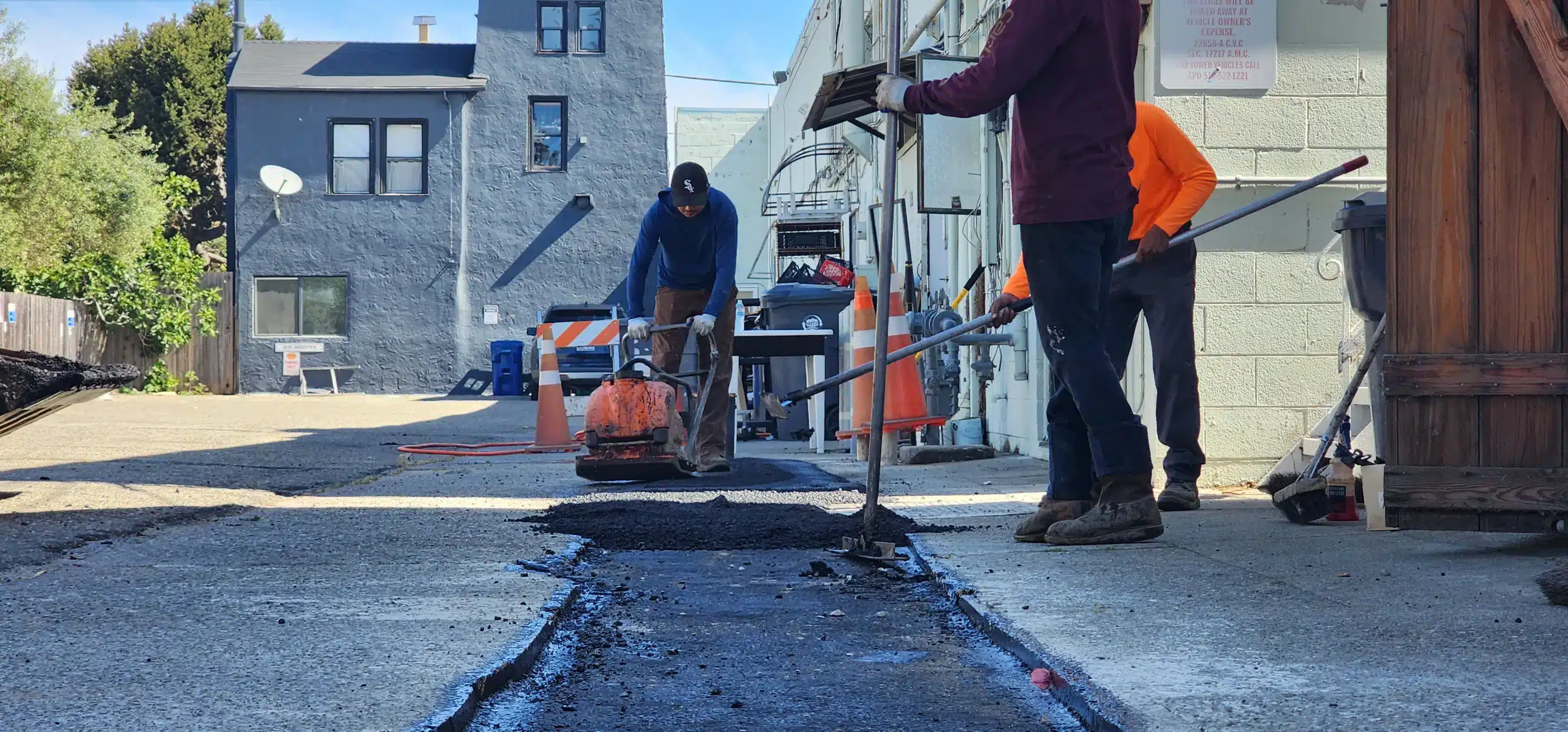
Property owners and facility directors across San Jose face rapid pavement deterioration caused by two compounding factors: highly expansive native clay subgrades that shift with seasonal moisture cycles, and relentless vehicle traffic serving regional transit corridors. Without proper structural engineering, standard asphalt installations experience accelerated alligator cracking, subbase pumping, and costly drainage failures.
Our asphalt paving services resolve subgrade instability at the engineering level before placing a single ton of hot mix. Explore our subbase stabilization methods, precision milling workflows, and regulatory compliance tables below to evaluate the right scope for your San Jose facility.
SCHEDULE A TECHNICAL PAVEMENT AUDIT IN SAN JOSE
Full-depth structural reconstruction, precision milling, and heavy-duty overlays throughout San Jose and the Santa Clara basin.
Precision Pavement Engineering Tailored to Local Subgrades
We approach asphalt paving in Silicon Valley through geotechnical evaluation, calculating exact Traffic Indices (TI) rather than applying arbitrary surface thicknesses. By stabilizing unstable native clays with geogrid reinforcement and placing Caltrans-approved Class 2 aggregate base, we ensure uniform structural load distribution.
- Subgrade Geotechnical Stabilization
- Nuclear Density Compaction
- Caltrans-Spec Hot Mix
- Title 24 Compliance
This Is What Our Clients Say About Our Work
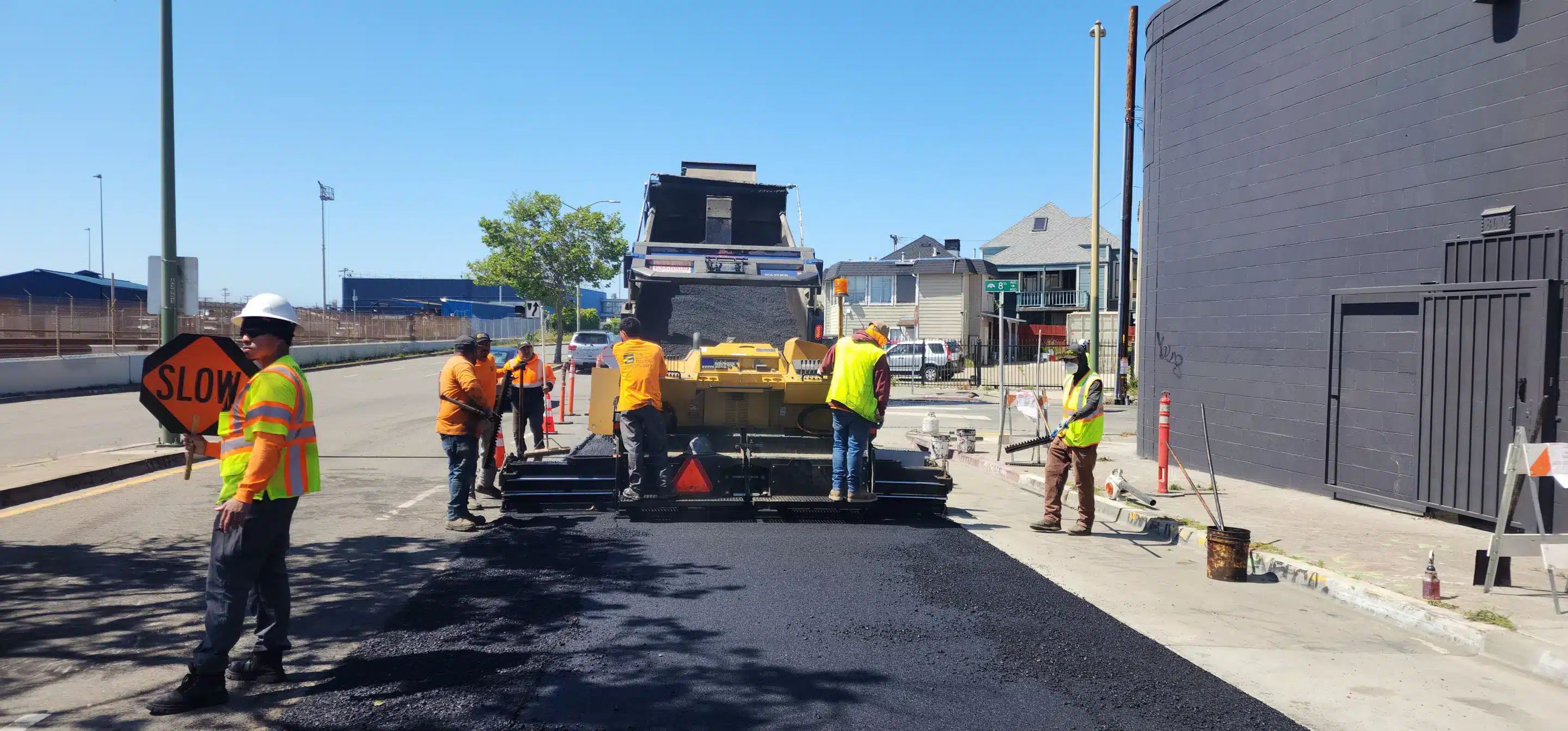
Full-Depth Pavement Reconstruction & Expansive Clay Subgrade Remediation
Subsurface soil across North San Jose and Berryessa consists predominantly of expansive Santa Clara clays characterized by high plasticity indices (PI > 25). During winter rains, unsealed or insufficiently stabilized subgrades absorb water and swell, then contract and heave during dry summer months. This hydraulic movement shears unreinforced asphalt cross-sections, producing severe base-level alligator cracking and structural depression under sustained vehicle loading.
Precision Mill & Overlay Resurfacing with Title 24 Grade Compliance
When a property's base course remains structurally sound, full reconstruction is an unnecessary capital expense. However, parking facilities across San Jose must comply with strict California Building Code Title 24 Chapter 11B accessibility mandates. Adding asphalt layers without edge grinding creates drainage dams, alters curb reveals, and causes accessible parking stalls and path-of-travel routes to exceed the maximum legal cross-slope tolerance of 2.08% (1:48), triggering substantial legal exposure under ADA regulations.
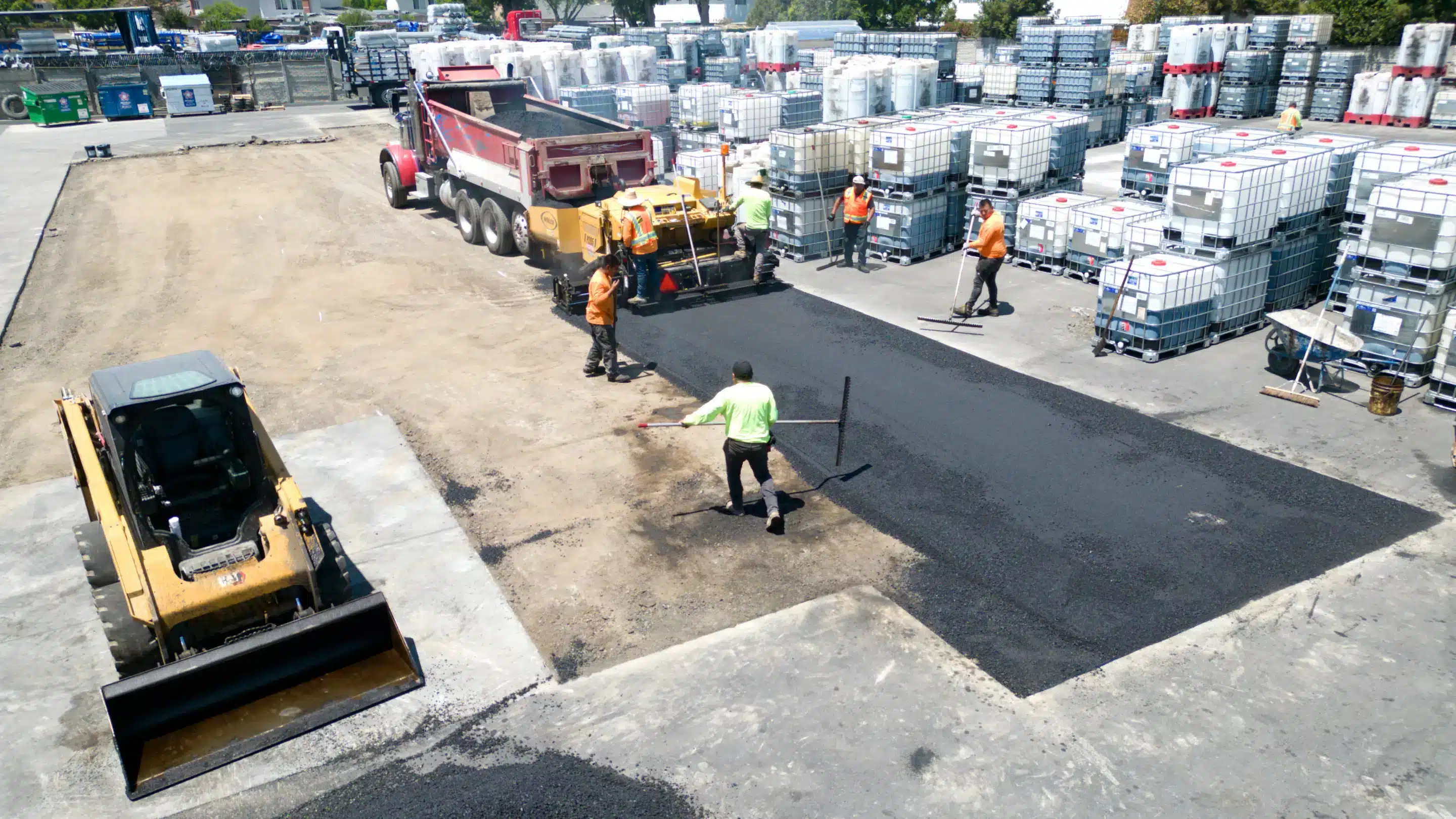
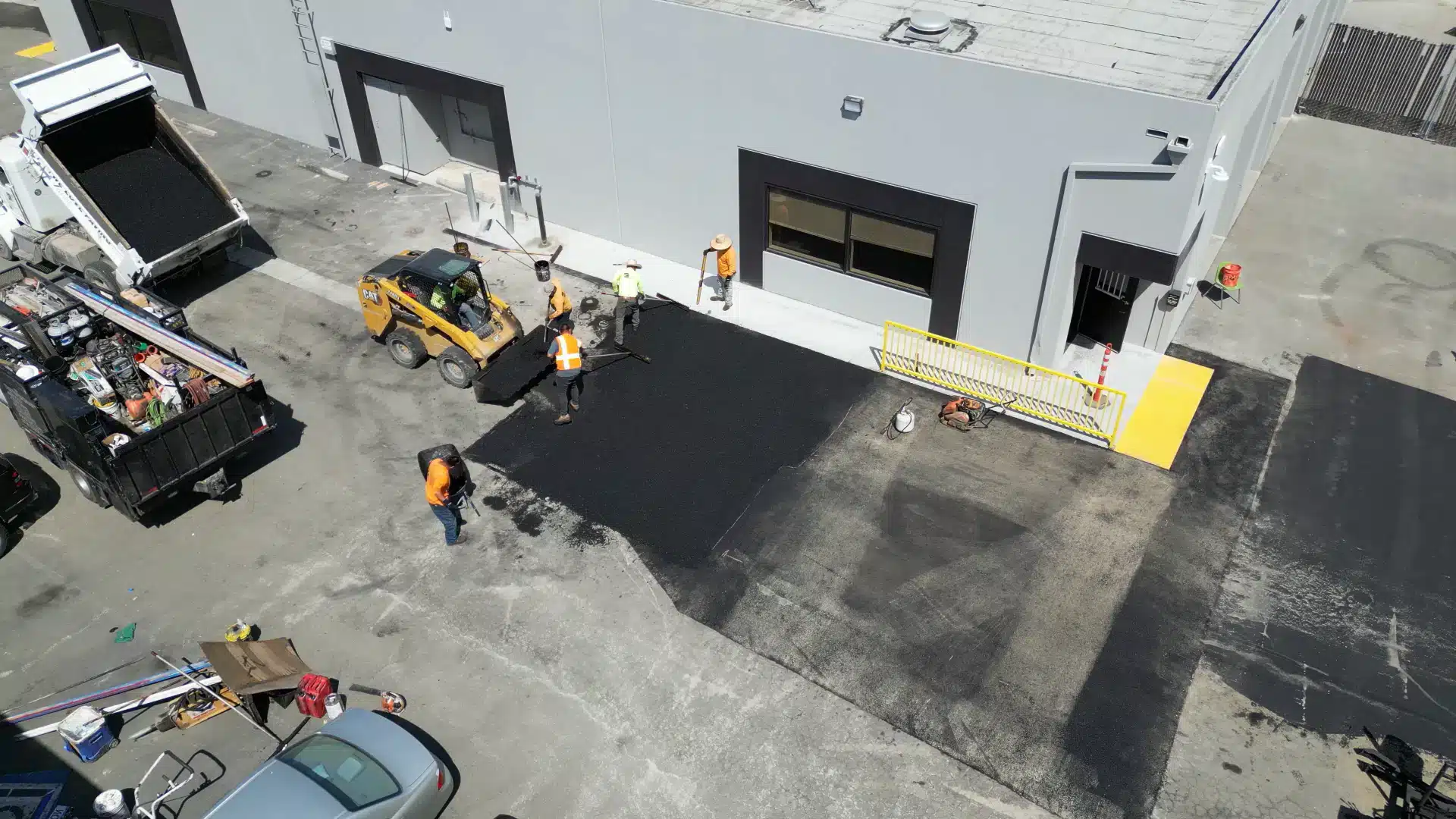
We deploy variable-depth cold milling to plane deteriorated surface courses, mill transition headers around perimeter curbs, and re-establish precise drainage slopes. Before laying a 1.5-inch to 2.5-inch Type A asphalt wearing course, we install a high-tensile paving fabric interlayer that seals underlying hairline fractures and stops reflective cracking. Laser-guided grading ensures all ADA paths of travel maintain slopes strictly within Title 24 tolerances while directing runoff to municipal storm infrastructure without standing water.
Asphalt Paving in San Jose: Risk Mitigation & Engineering Standards
Understand how our engineering protocols protect your capital investment, eliminate structural callbacks, and shield properties from regulatory penalties.
| Property Owner Concern | Local Silicon Valley Cause | Our Engineering Standard & Protection |
|---|---|---|
| Pavement sinking, rutting, or alligator cracking within 2–3 years | Highly expansive Santa Clara basin clays swell and contract during seasonal wet/dry cycles, destabilizing unreinforced aggregate bases. | Biaxial geogrid subgrade stabilization with 6–8"+ of Caltrans Section 26 Class 2 Aggregate Base proof-rolled before paving. Minimum 95% Compaction (ASTM D1557) |
| Fines or lawsuits from ADA non-compliance after paving | Applying un-milled overlays alters curb reveals and pushes parking stall and ramp gradients past California Title 24 Chapter 11B limits. | Precision edge milling and laser-guided grading to ensure all access aisles and paths of travel meet mandatory thresholds. Maximum 2.08% Slope (1:48 CBC Title 24) |
| Water pooling and base erosion near curbs and catch basins | Improper transition milling and flat spot paving cause stormwater to pond, saturating asphalt edges and softening the subgrade. | Variable-depth cold milling re-establishes positive grade directed to municipal storm drainage networks to stop moisture intrusion. >1.5% Finished Drainage Gradient |
| Surface crumbling or aggregate ravelling under vehicle traffic | Inadequate in-place compaction allows air and water penetration, causing binder oxidation and stone displacement under axle loads. | Dense-graded Caltrans Section 39 Type A hot-mix asphalt verified on-site with calibrated nuclear density gauges. Minimum 95% Density (ASTM D2950) |
Engineered Asphalt Solutions Built for San Jose's Soil and Traffic Demands
Protecting asphalt pavement in San Jose requires addressing volatile Santa Clara clays and heavy traffic patterns before asphalt is ever delivered to the jobsite. By pairing comprehensive geotechnical remediation with laser-controlled cold milling and Caltrans-certified compaction, sanjoseasphalt delivers pavement cross-sections engineered to resist seasonal settling and pass strict Title 24 inspections. Partner with our team to safeguard your facility's infrastructure with transparent, code-compliant paving.
Frequently Asked Questions: Asphalt Paving in San Jose
Direct answers regarding soil remediation, Title 24 compliance, and project execution across Silicon Valley.
How do expansive Santa Clara clays affect asphalt paving longevity in San Jose?
Native Santa Clara soils feature high plasticity clay that expands significantly when wet and shrinks when dry. Without adequate structural preparation, this soil movement causes base failure and severe alligator cracking within 24 to 36 months. We prevent this by proof-rolling the subgrade, integrating biaxial geogrids, and installing a minimum of 6 to 8 inches of Caltrans Class 2 aggregate base compacted to 95% relative density before paving.
Will our asphalt repaving project require ADA and Title 24 upgrades for our San Jose parking facility?
Yes. In California, asphalt resurfacing or alteration triggers Title 24 Chapter 11B requirements for accessible paths of travel, stall dimensions, and slope tolerances. Accessible stalls and loading zones cannot exceed a 2.08% slope in any direction. Our crews use precision cold milling and laser-guided grading to ensure asphalt depths do not alter existing ADA compliances or push cross-slopes past legal thresholds.
What is the difference between full-depth reconstruction and a mill-and-overlay in San Jose?
Full-depth reconstruction excavates the entire asphalt and base cross-section down to native soil, which is necessary when deep base failure or subgrade pumping is present. A mill-and-overlay removes only the top 1.5 to 2.5 inches of deteriorated asphalt using a cold milling machine before laying a new wear course, making it a faster, more cost-effective solution when the aggregate base remains structurally sound.
What asphalt mix specifications do you use for high-traffic lots in Silicon Valley?
We utilize Caltrans Section 39 Hot Mix Asphalt (HMA) Type A, typically specified with 1/2-inch or 3/4-inch aggregate gradations and PG 64-10 binder formulated for Central Coast and Bay Area climate demands. For heavy truck corridors or delivery loading bays, we evaluate Traffic Index (TI) requirements to engineer thicker base courses and specialized high-stability asphalt designs.
How do you minimize disruption to active facilities and campuses in San Jose?
We execute paving in phased sequences, dividing large parking fields and access lanes into distinct working quadrants. Our crews establish dedicated detours, coordinate off-peak or weekend paving shifts, and utilize high-compaction rollers to reopen completed lanes within 24 to 48 hours, keeping tenant and visitor traffic moving safely.
How frequently should a newly paved asphalt surface in San Jose undergo preventative maintenance?
A newly installed asphalt surface should cure for 90 to 120 days before applying an initial sealcoat. After this initial application, regular parking lot maintenance including protective sealcoating and crack sealing should be scheduled every 3 to 4 years to shield the asphalt binder from UV oxidation and winter rainfall infiltration.
Request Your Estimate
Tell us what you need help with. We'll review the project details and follow up with next steps, no obligation.
Phone
669-274-4307
Email
[email protected]
Location
511 Jacklin Rd, Santa Clara
Hours
Mon–Fri 8:00 AM – 5:00 PM
Start Your Free Project Request
Serving Santa Clara & Silicon Valley
Santa Clara Asphalt Paving serves Santa Clara, San Jose, Santa Clara, Sunnyvale, Fremont, Campbell and nearby commercial and residential areas.